Product-Person Fit
by Henrik Holen on Wed Feb 25 2026
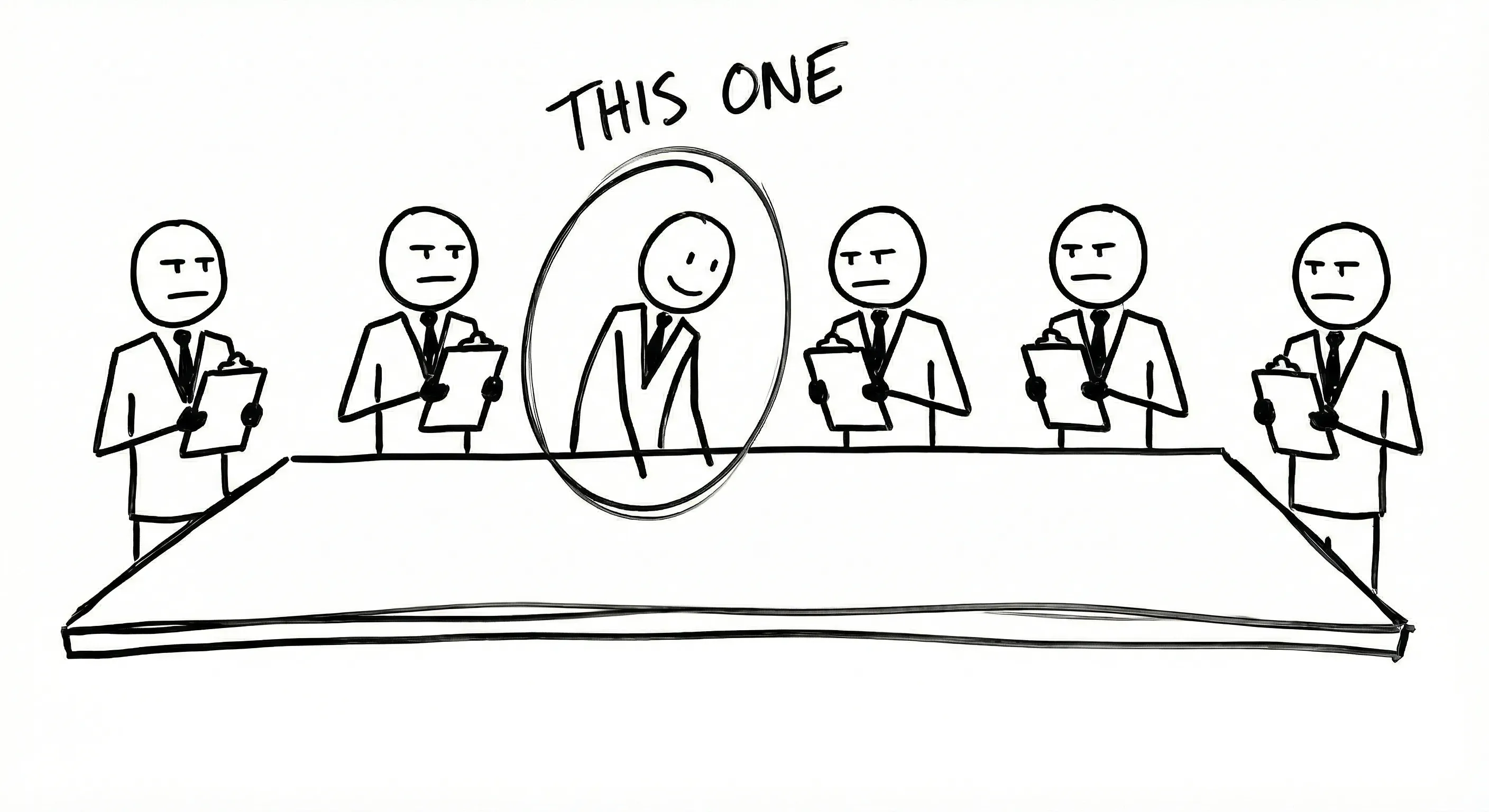
It’s a strange thing when an enterprise customer starts to feel almost like a friend. But if you’ve ever had a real champion inside a customer’s organisation — someone who rolls their eyes at their own procurement team on your behalf — you know the feeling. It’s not quite friendship, but it’s not a normal vendor relationship either.
That happens because somewhere inside that organisation, you found a person who already thinks the way you do. Your product just made it visible.
Where the decision actually happens
At Viva Labs, we built a white-label smart home platform. Our customers were enterprises, but the product they sold was a consumer one. That meant we were always in this strange position of being evaluated by procurement teams while building something for people’s living rooms.
Our strategy was to get people to take the product home as quickly as possible. Way before feature comparisons were done, way before spreadsheets, way before the RFI. If someone on the customer side was living with our product in their house, the formal evaluation almost didn’t matter. The conviction was already there.
Enterprise decisions look rational on paper. In practice, they’re full of moments like that. The evaluation is structured, but the conviction comes from somewhere more human. By the time procurement shows up, the person across the table has already decided. Not because of your documentation. Because something about the product felt right when they actually used it.
Champions aren’t made. They’re found.
The temptation is to think of champions as something you cultivate. You identify a stakeholder, build the relationship, give them materials, hope they go to bat for you. That’s account management. It works, but it’s slow and it’s fragile.
The real shortcut is finding the person who already thinks the way you do.
Every product embodies a philosophy. Yours might be simplicity. Or it might be API-first, or delightful UX, or “no interface.” Whatever it is, somewhere inside the customer’s organisation, there’s a person who shares that philosophy. They’ve been frustrated by the same things you’ve been frustrated by. They’ve argued for the same approach and been outvoted by the enterprise machinery around them.
When they see your product, they recognise it. That’s the aha moment. Not “this is cool” but “finally, someone built it the way it should be.”
That person doesn’t need to be sold. They need to be found. And once you find them, the relationship stops being vendor-customer. It becomes two people who see the world the same way, one of whom happens to work at the company buying the product.
What makes someone champion-able
Our setup process at Viva was designed for humans, not system administrators. No complicated steps. We used to say you could get your grandma to set it up. That was a deliberate product choice. We could have built admin-first onboarding that smart home tinkerers would have loved. Instead, we built something warm and simple.
That simplicity was what made PMs on the customer side light up. They could imagine their customers loving it. Not tolerating it, not adopting it after training. Loving it.
Nobody becomes a champion of your product because you’re cheaper. Nobody stakes their internal reputation on your SOC 2 compliance. Champions are emotional. They’ve had an aha moment that separates your product from everything else they’ve evaluated. There’s something lovable about it that spoke to them personally.
Those moments are almost always the simple, human, consumer-grade ones. And they’re exactly the moments that get eroded first when enterprise requirements start piling up.
The paradox
Here’s the tension. In enterprise, you are building for a very specific person and for everyone at the same time.
The champion is specific. They share your worldview. They respond to the philosophy your product embodies. The relationship is almost personal.
But the product has to survive procurement, pass security audits, integrate with existing systems, and work for thousands of users who will never feel the way your champion feels. You can’t build only for the person who already loves you.
Lean too far toward the champion and you build something niche that doesn’t survive procurement. Lean too far toward everyone and you build something generic that nobody falls in love with.
We felt this constantly. Every enterprise customer brought stakeholders who wanted to shape the product. Each request was reasonable on its own. Taken together, they would have killed the thing that made our champions champion us in the first place. Many cooks, all wanting to spoil the broth.
Protect what made them recognise you
We’ve had deals where procurement played hardball and our champions just sat there, rolling their eyes, smiling at us. “Don’t worry, I’ve got this.” That’s what a real champion looks like. They’re not neutral evaluators anymore. They’re on your side of the table emotionally, even while sitting on the other side physically.
But that relationship is a two-way street. If your champion has gone to bat for you internally and something goes sideways — a misunderstanding surfaces in a negotiation, or they feel caught off guard — the damage isn’t necessarily to the deal. It’s to the relationship. You might still close. But the person who used to roll their eyes at procurement on your behalf now feels let down, and that’s much harder to repair than a contract clause.
The same applies to the product itself. The moment you dilute it into something safe and generic, you lose the signal that attracted them. They found you because your product felt like it was built by someone who thinks the way they do. If you sand down every edge to satisfy every stakeholder, that recognition disappears.
The compliance stuff still has to be there. You still need to win the RFI. The champion doesn’t replace the checklist. But the champion is why you survive the parts where the checklist is a tie. And in enterprise, most deals are ties on paper.
Product-market fit tells you whether the market wants what you’ve built. Product-person fit tells you whether someone inside the customer will fight for it. In enterprise, you need both. But the second one comes first.
Subscribe to my newsletter
Get my latest thoughts on product and strategy delivered to your inbox.