The Type 53 Pattern
by Henrik Holen on Tue Nov 25 2025
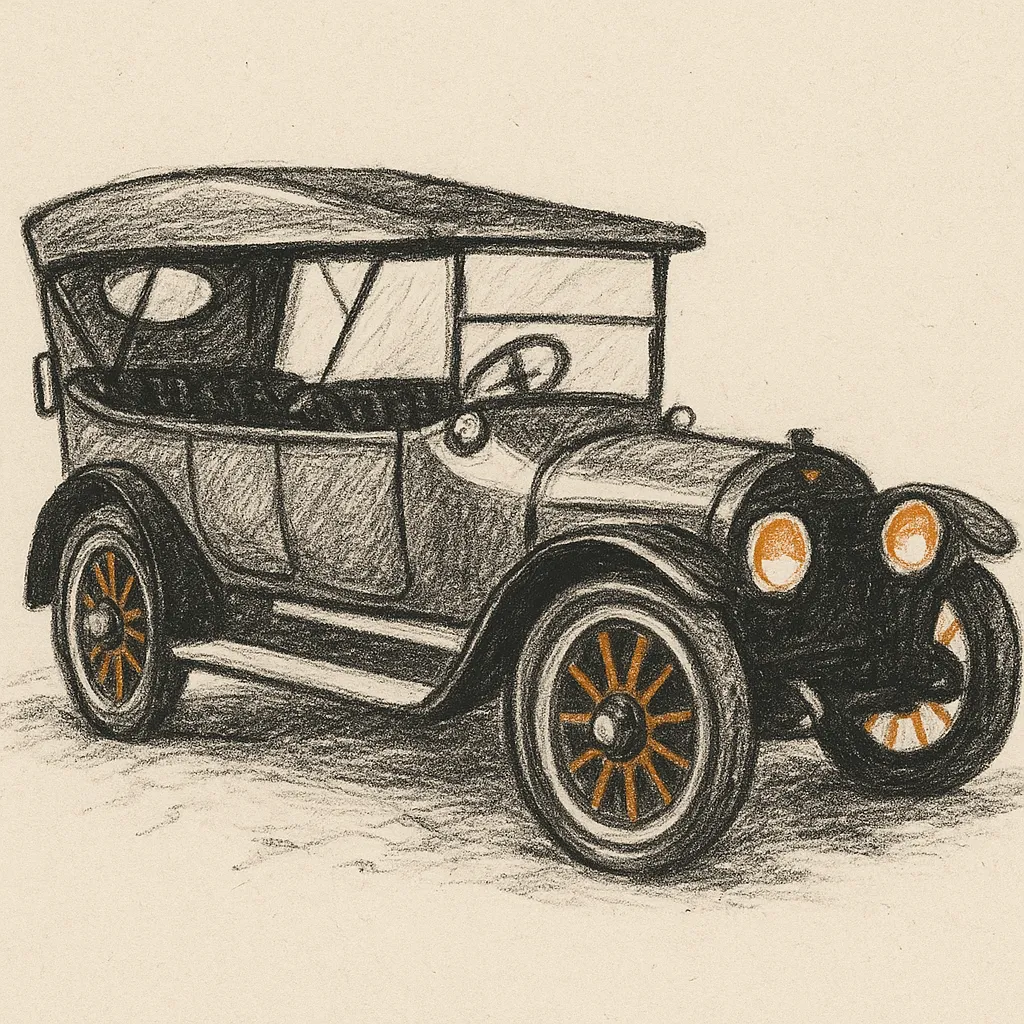
In 1916, Cadillac released the Type 53. It only existed for a year, yet it might be the most influential car ever built.
It was the first car that worked the way cars work today. The Model T is famous, but you couldn’t start it without someone teaching you the sequence. The Type 53 changed that. The basic experience is the same as a modern Escalade. Same pedals. Same steering. Same logic.
The difference is everything underneath. A new car is a rolling data centre. Thousands of micro-decisions every second. And somehow the experience is still familiar, because familiarity is the point. Hidden complexity removed the boring parts, the difficult parts, and the dangerous parts.
The urge to reinvent
Most product teams feel a pressure to disrupt. It is more exciting to pitch a bold new interaction model than to fix the loading state that fails 2% of the time. But disruption is expensive. Every time you change how a tool works, you ask users to pay a cognitive tax. You are betting that your new method is so much better that it justifies the frustration of relearning.
That bet rarely pays off. Most users don’t want novelty. They want the thing they already know to work better.
The car industry understood this. After the Type 53 established the pattern, the industry didn’t keep reinventing the wheel. They just made the same controls safer, smoother, and more responsive.
Predictability allows muscle memory to form. The driving experience remained constant while antilock brakes, traction control, and collision detection were layered underneath. You still press the brake pedal; the car just stops better. The pedal communicates its function through shape, position, and resistance.
The principle applies everywhere. Think of the badly designed back button you’ve likely encountered many times: sometimes it steps back, sometimes it returns to home. Did it save your work? You have to hesitate because you can’t predict the outcome. Trust lives in knowing what will happen before you act.
A framework for when to change (and when not to)
The question isn’t whether to innovate, but where to direct that innovation. You need a filter for these decisions. Two frameworks help clarify: Jobs to be Done and the Kano Model.
Jobs to be Done asks: what job is your product actually hired to do? This is your first filter. If the fundamental job hasn’t changed, changing the interface is almost always a mistake. The job of a car is still to transport you safely from point A to point B under your control. That hasn’t changed in a century, so neither has the basic interface.
The same pattern explains the success of the Nest thermostat. The job of a thermostat never changed: make my home the temperature I want without me having to think about it. So they kept the familiar circular dial. You still turn it to set a temperature. But underneath, it learned your patterns, optimised energy usage, and eliminated tedious programming. The interface stayed predictable. The bill went down.
The Kano Model asks: within that job, where should you invest? It categorizes product attributes into three types:
Basic expectations must work reliably or users become frustrated. For a car, this is the predictable behavior of the brake pedal, the steering wheel, the gear shift. For software, it’s the back button working consistently, saves happening when expected, buttons responding the same way every time. These are threshold features. Get them wrong and trust evaporates. Get them right and users barely notice, which is exactly the point.
Performance attributes are where more is better. Faster acceleration. Better fuel economy. Smoother braking. In software: faster load times, more accurate search, better error recovery. This is where the Type 53 pattern shines. You keep the pedal in the same place, but you add antilock brakes. You keep the interface stable while making the performance exponentially better.
Delighters are unexpected bonuses that don’t disrupt the core experience. Heated seats. Automatic parking. Features you didn’t know you needed. In software, this might be smart suggestions, helpful shortcuts, or ambient intelligence that anticipates your needs.
The framework creates a clear prioritisation:
-
First, ask if the job changed. If not, don’t change the interface.
-
Then, ensure basic expectations are rock solid. The interface must be predictable and consistent.
-
Next, invest in performance improvements beneath that stable interface.
-
Finally, add delighters that enhance without disrupting.
A lot of product teams get this backwards. They chase delighters, because those are exciting, while basic expectations remain unreliable and performance improvements get deprioritised. They change interfaces when the job hasn’t changed, forcing users to relearn something that was working fine.
Keep the interface, evolve the foundation
The real work isn’t reinventing how people interact with your product. It’s making the familiar interaction capable of doing more.
You can use today’s stable interface to build tomorrow’s foundation. Apple does exactly this, using the Type 53 pattern to validate future product bets. They often build entire future platforms beneath current interfaces. Spatial audio in AirPods wasn’t about reinventing headphones—the job of headphones hasn’t changed. It happened to be a delighter, but it was also secretly infrastructure for Vision Pro. ARKit on iPhone wasn’t disrupting how you use your phone. It was proving out the technology before they needed it, and using today’s stable interface to validate tomorrow’s new one.
This is the sophisticated version of the Type 53 pattern: keep the current interface stable while you build toward the next paradigm. Maintain basic expectations, compete on performance, layer in delighters, and when the job itself finally evolves, you’ll have the foundation ready.
The long way works
The car industry kept the driving experience familiar while the system underneath grew exponentially more complex. They understood something product teams often forget: users don’t hire your product to learn a new interface. They hire it to get a job done.
The pattern is clear. Identify the job. Keep the basic interface stable and predictable. Invest in performance improvements underneath. Add delighters that don’t disrupt the core. And only when the job itself fundamentally changes should you consider changing how users interact with your product.
Progress isn’t always exciting. Often, it looks like fixing the thing that breaks the flow, making error messages clear, or ensuring a button behaves consistently. It is about making the familiar experience work so well that people forget it was ever difficult.
That patience is what turned the Type 53 into a hundred-year standard. Once the interface works, the job is making it work better, not making it different.
Subscribe to my newsletter
Get my latest thoughts on product and strategy delivered to your inbox.